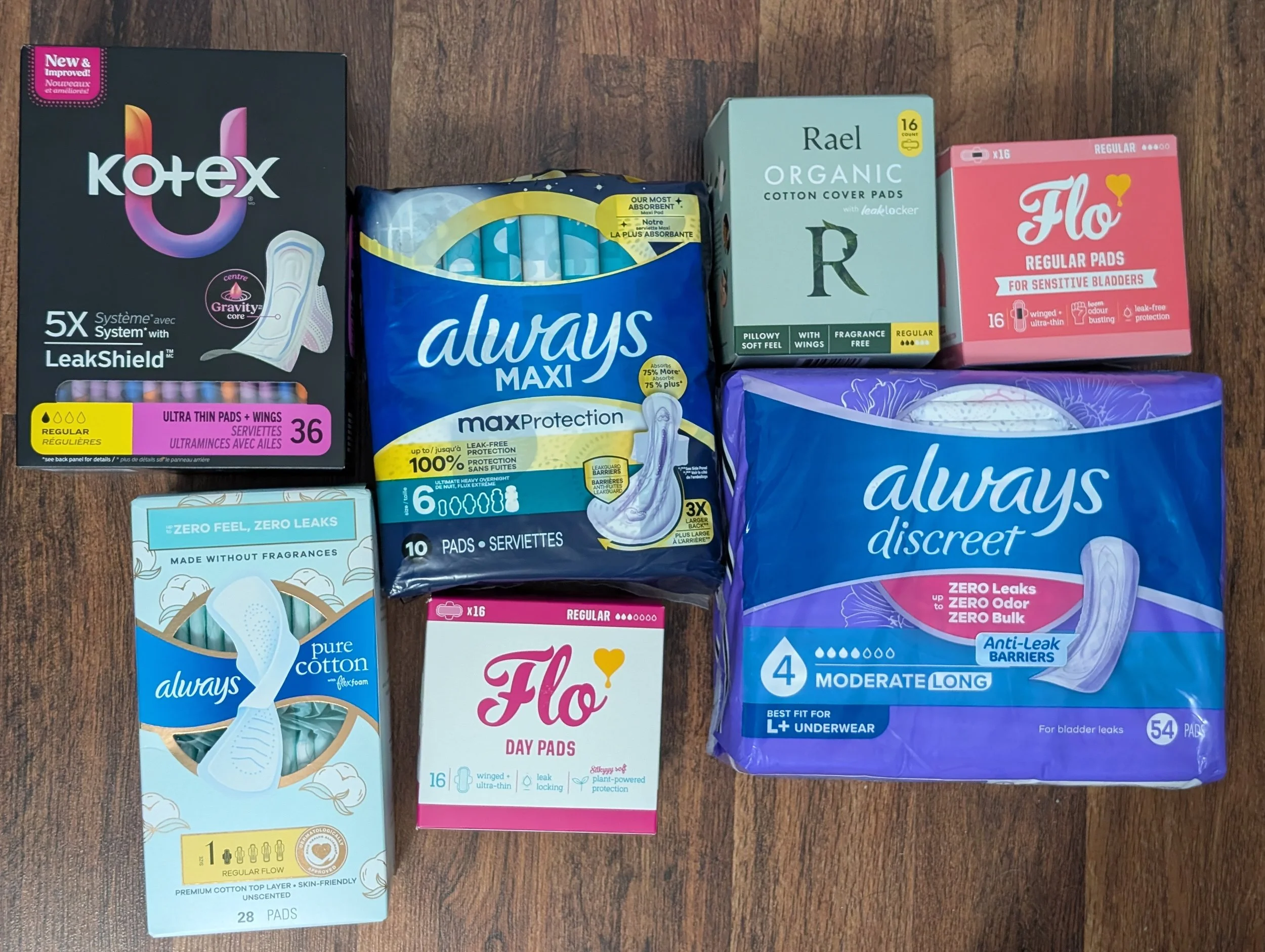
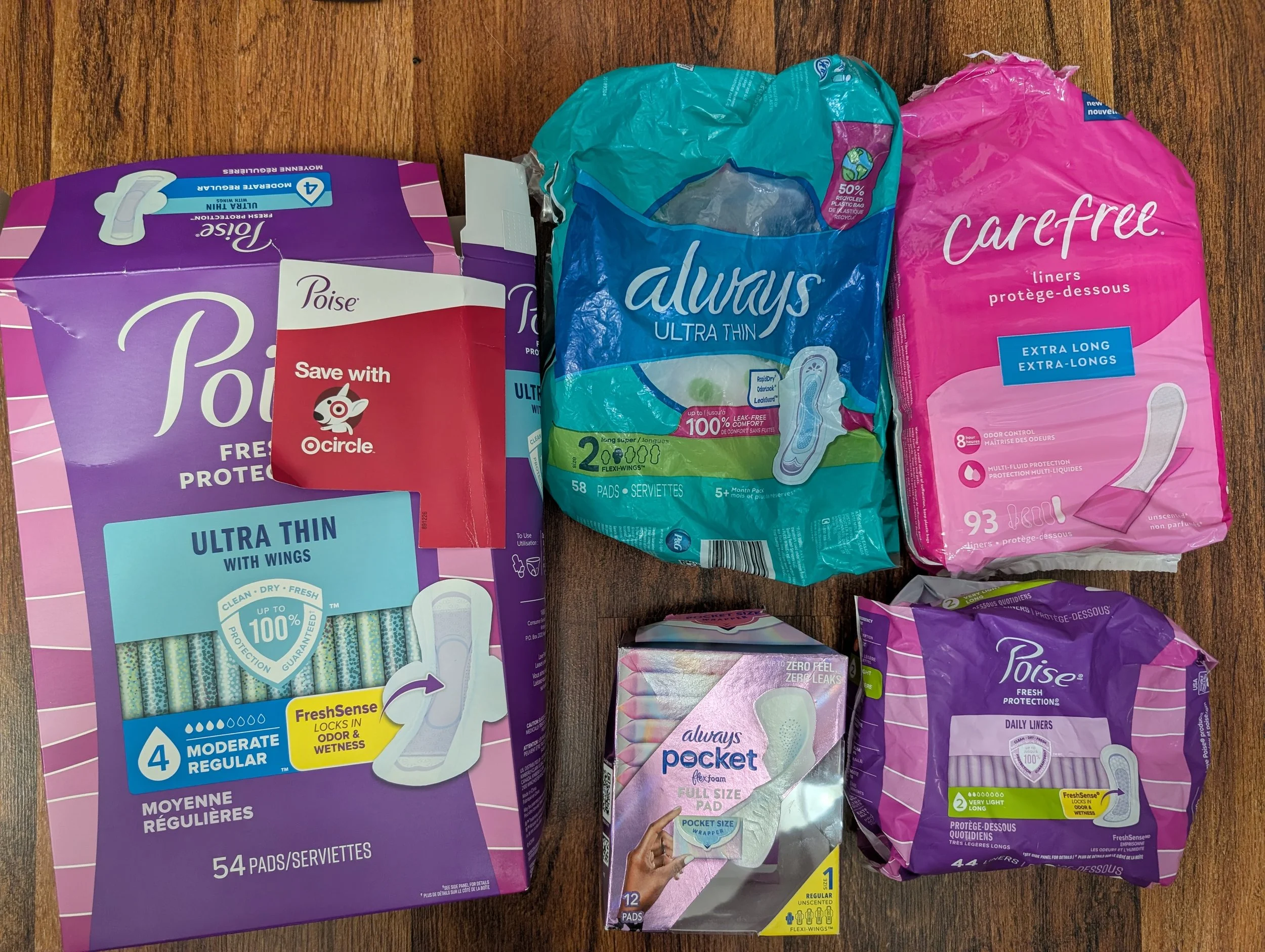
Seeing Red: Why Modern Pads Don't Perform
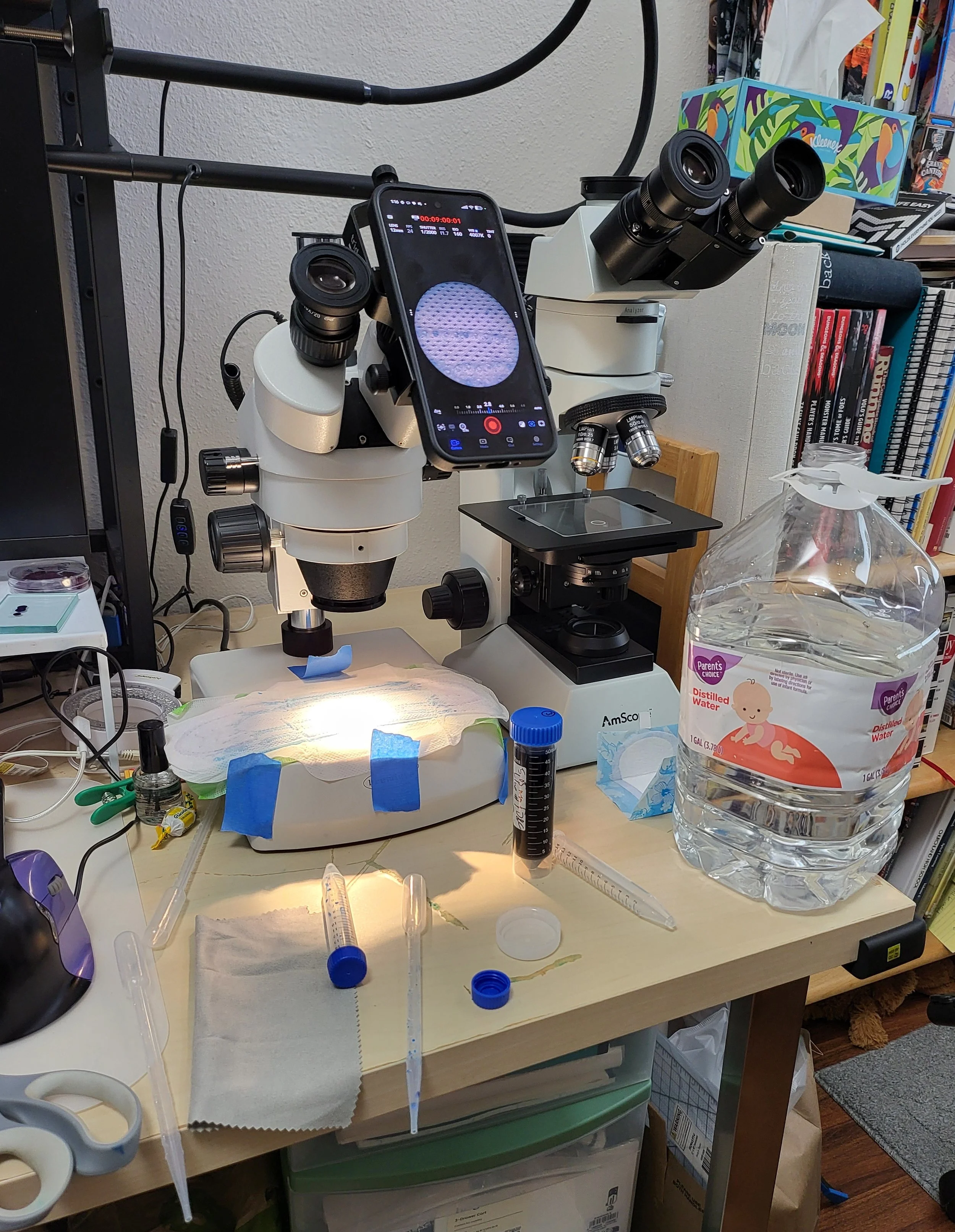
I’m creating a series of informative videos and articles about menstrual pads and their performance, based on microscopy-based investigations, teardowns, and testing of commercial products. This is motivated by the fact that, for many years, manufacturers opted to test absorbency of period products with saline solution instead of liquids that more accurately simulate the composition, viscosity, and behavior of menstrual blood – leaving menstruating people frustrated with the inability of their pads to perform as needed, especially in response to heavy flows or sudden “gushes” of blood. As a result, incontinence pads are an often-sought alternative to menstrual pads, because they typically are more able to rapidly absorb liquid thus preventing leakage.
I recently created and shared a couple of videos [1, 2] on the topic to TikTok and Instagram – both of which have received an enthusiastic response from viewers, who expressed frustration about modern period pad performance in their comments. My unique background – with expertise in polymer science and failure analysis – informs my approach to teardowns, microscopy, and analysis, and enables me to effectively contextualize the performance of menstrual and incontinence pad products. My goal is to analyze how fiber architecture, channel geometry, and materials choices impact fluid wicking and retention, across an array of fluid compositions that more closely mimic menstrual fluid.